Scientific Research
Evidence-based benefits, supported by both research and real-world experience.
Below are links to scientifically published articles exploring the documented benefits of massage therapy in animals. While current research supports many positive effects, it also consistently highlights the need for further study to better understand the full scope of those benefits. At Tranquil Touch, we share that perspective and welcome continued research in this field.
With over 16 years of hands-on experience working with horses and dogs, we’ve seen these benefits firsthand. We have worked with animals experiencing arthritis, laminitis, herniated discs, ligament injuries, muscle strain, paralysis, and performance-related soreness—often with noticeable improvement in comfort and mobility.
While these results are meaningful, we recognize the importance of scientific research. We invite you to explore the resources below to learn more about the evidence supporting massage therapy.
Stride Length & Range of Motion
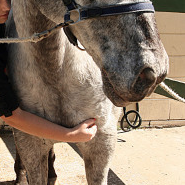
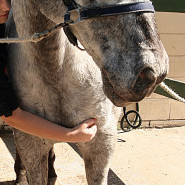
Massage therapy has been shown to improve stride length and overall range of motion in horses.
"The relationship between massage to the equine caudal hindlimb muscles and hindlimb protraction" published by C. Hill and T. Crook in Equine Veterinary Journal gave one group of horses a placebo procedure while another group received massage therapy. The horses who received the placebo showed no increase in stride, while "All horses showed a significant increase in the range of passive movement following massage." (p.685) This study concluded that "massage to the caudal muscles of the equine hindlimb, that is the superficial gluteal, semitendinosus, biceps femoris and semimembranosus muscles, significantly increases both passive and active hindlimb protraction." (p.685) Which was consistent with results of studies done in humans.
Lymphatic Drainage & Immune Support
Pain Management & Recovery
Stress Reduction & Relaxation
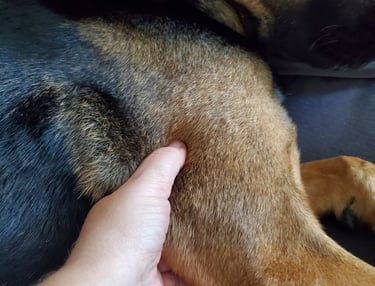
Massage therapy can significantly increase lymphatic flow, which plays a vital role in the immune system.
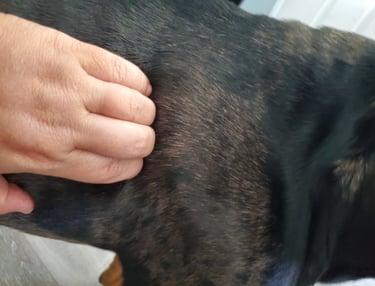
The clinical trial "Studies of the effect of massage on the flow of lymph from the foreleg of the dog" published by Ladd, Kottke, and Blanchard in Arch Med Phys Rehabil showed that "massage was significantly more effective in increasing lymph flow than passive flexion and extension of the forelimb or electrical stimulation of the forelimb musculature." This increase in lymph flow lasted for hours after the massage and resulted in more effective transportation of protein, particles and leukocytes from intercellular spaces into the lymphatic system. The lymphatic system is an essential part of the animal's immune system. Lymph stagnation can result in arthritis, lethargy, joint pain, and more.
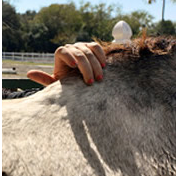
Massage therapy is widely recognized for its role in reducing pain and supporting recovery.
In "The Role of Manual Therapies in Equine Pain Management" published by DVM Kevin Haussler in The Veterinary clinics of North America. Equine practice the author states, "Clinically, massage and soft tissue mobilization are believed to increase blood flow, promote relaxation, reduce muscle hypertonicity, increase tissue extensibility, reduce pain, and speed return to normal function." However, he admits that more research needs to be done to further study its effectiveness. The author also mentions that much of what we know regarding manual therapies in horses, comes from our studies of humans. We do have studies that show massage therapy is effective in pain management in humans.
Massage therapy has been shown to reduce stress and promote relaxation in horses.
Multiple studies have been done on the effects of stress reduction during massage therapy in horses. "A Preliminary Study on the Effect of Massage to Reduce Stress in the Horse" showed a reduction in heart rate and an improvement in behavior. "Massage or music meant to be relaxing, result in lowering salivary cortisol concentration in race horses" showed that massage therapy and music reduced the horse's cortisol (stress hormone) levels. And finally, "The effect of relaxing massage on heart rate and heart rate variability in purebred Arabian racehorses" showed a reduction in heart rate and stress in horses who received massage therapy, as well as an increase in race performance!
Contact
Reach out for appointments or questions.
Call or Text
(727) 793-7314
© 2026. All rights reserved.
Massage therapy is not a substitute for veterinary care. Please consult your veterinarian for diagnosis and treatment of medical conditions.